SSE in the regions
On the eve of the Global SSE Bordeaux GSEF 2025 Forum, the Nouvelle-Aquitaine Region, the Gironde Department and CRESS Nouvelle-Aquitaine proposed 9 itineraries to discover the dynamics and local initiatives of the Social Solidarity EconomyEach itinerary invited participants to immerse themselves in innovative and meaningful projects that embody the values of cooperation, solidarity and sustainable local development.
Four pathways took place in Gironde - Médoc, Bassin d'Arcachon & Val de Leyre, Libournais and Sud-Gironde - and 5 others in neighbouring departments, in Charente, Charente-Maritime, Dordogne, Lot-et-Garonne and Landes.
Around 1,000 people were involved in these visits, including numerous local authorities, nearly 150 actors from the social and solidarity economy, and, in Gironde, support from the Pôles ESS and Collectif Marées. All were motivated by a desire to share the local challenges facing their region and the responses provided by those who have chosen to act for the common good.
Each route was also an opportunity to offer a unique opportunity to discover the countryside, heritage and local specialities throughout the day.
Pathways in Gironde
Pathway 1 – Bassin d’Arcachon & Val de Leyre



❯ Transitions
Together and differently
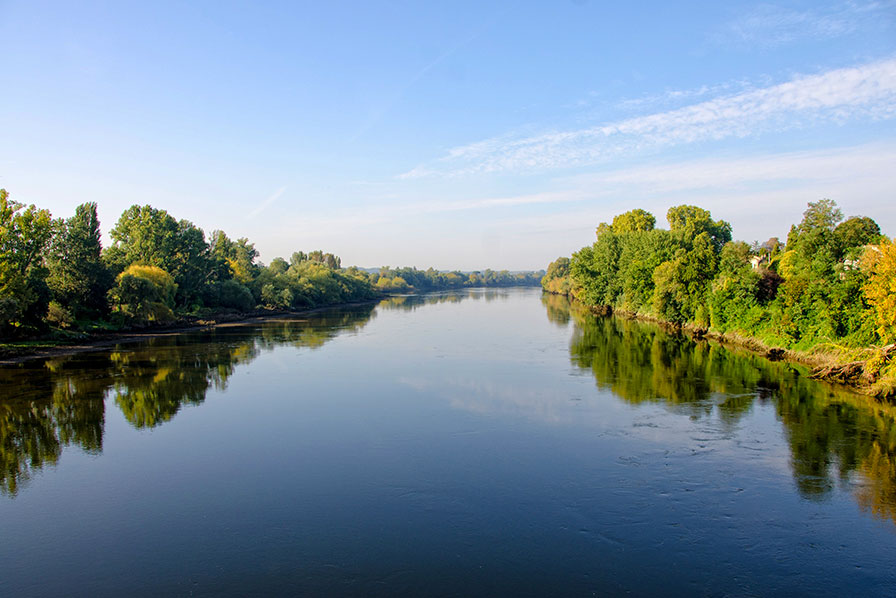
This tour invited participants to imagine together different ways of addressing social and environmental challenges. A day devoted to discovering concrete solutions devised by local stakeholders to support the transition in the region, it encouraged participants to take action through a participatory activity. In the heart of a region where local innovation goes hand in hand with unspoilt nature, this course provided an opportunity to appreciate the natural, cultural and gastronomic heritage of the Arcachon Bay & Val de Leyre region.
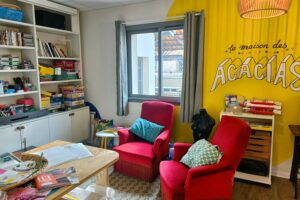
After a welcome from the Mayor of Audenge and local councillors, we're off to La Maison des Acacias, a third-party centre run by PRiSME, which is committed to social and environmental change. Reel laboratory for environmental and social innovation, this place embodies a dynamic of ‘working together’, reinventing ways of working, creating and cooperating in the area. It's an inspiring journey to the heart of a collective space where experimentation, social links and inclusion come alive on a daily basis.
Next, heading to the Domaine de Certes et Graveyron Next, heading to the Domaine de Certes et Graveyron for a nature walk. There'll be salt air, bird watching and singing, and new ideas for preserving our ecosystems. In this exceptional setting, a buffet of local produce will be served. An exhibition on birds created by the APEX association and a welcome by the care centre of the LPO (League for the Protection of Birds) were available throughout lunch. APEX and a welcome by the care centre of the Ligue pour la Protection des Oiseaux (League for the Protection of Birds) were available throughout lunch.
L’après-midi était consacrée à 4 ateliers de cocréation qui ont invité à prendre part à la réflexion et à l’action. Économie circulaire, insertion sociale par les métiers de l’environnement, science et culture comme leviers de sensibilisation, ou encore atelier spectacle vivant, autant d’approches auxquelles chaque groupe a contribué. Pour clôturer la journée, chacun ont pu accrocher son prochain pas pour la transition sur l’arbre des actions, Manifeste du Faire Autrement.
Required: rainwear (as a precaution) and suitable footwear for walking
As well as being translated into English and Spanish, the route was also translated into French Sign Language
© Adobe Stock
© Maison des Acacias
With…
AMAP Cœur Bassin, APEX, Atenoba, Bassin Solidarité Emploi, Bionav, Chantier Sonore, Coopérative Tiers-Lieux, Domaine de Certes et Graveyron, Echo-Mer, Fumette, Insercycles, Komono, La Cantine des Acacias, L’Atelier de Mécanique Générale Contemporaine, Les Petits Débrouillards, Ligue pour la Protection des Oiseaux, Maison des Acacias, One Ocean, Regard Sous Marin, Slikke Radio
And the support of:
Timetable :
8 am / 5:30 pm
Bus travel time :
about 1h (2h round trip)
Key words : social and environmental innovation, ecological and social transition, ecosystems, circular economy, awareness-raising, social inclusion, culture, science, third places
Tourism benefits : walks in the heart of biodiversity, unspoilt natural surroundings, local gastronomy
Pathway 2 – Libournais

❯ Rural heritage
Living well in the region
The Libournais region is rich in exceptional wine appellations known to connoisseurs around the world, but this area is also a land of social and solidarity economy. Supported by local authorities, stakeholders are shaping development that is rooted in the community, respectful of the environment and connected to the inhabitants. This tour brought them together, offering a wonderful variety of initiatives and exchanges, as well as an immersion in heritage and tastings.
After passing through the vineyards of Saint-Emilion and along the Moulin de Porchères, participants were welcomed to Le Fieu by the mayor of the commune. The journey continued until Usine Végétale, a third-party centre that has been working on the challenges of social, environmental, economic and digital transitions since 2018. Hosted by the Communauté d'agglomération du Libournais (la Cali) and local stakeholders, participants were able to discover the site's activities through three workshops on eco-construction, living gardening and the circular economy. It was an opportunity to learn about sustainable techniques combining knowledge from the past with needs for the future, to explore agroecological practices that promote food resilience, and to see solutions for reusing waste. Local residents shared inspiring testimonials about the ESS, collected by the Radio Label Verte.
Then it's on to Saint-Denis-de-Pile, via Guîtres, to meet the mayor. Lunch and a tasting of local specialities was served in the gardens of the Médiathèque BOMA. La visite s’est poursuivie dans les rues de la ville pour y découvrir des initiatives citoyennes. Une exposition a révélé le patrimoine historique et culturel local, tandis qu’une projection à Accordeur, an association dedicated to contemporary music, presented various individual and collective works. On the banks of the Isle, the natural heritage were revealed with an immersion in the Parlement de l'Isle thanks to Collectif 3/3. Finally, it was time to head home after a visit to the local recycling centre.
© Adobe Stock
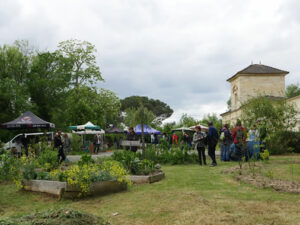
© Usine Végétale 209
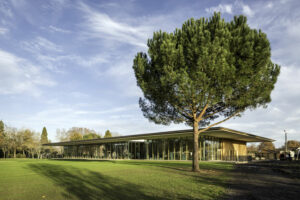
© Ville de Saint-Denis-de-Pile
With…
ADAPEI 33, AFEPT (trainees at the École de la 2th chance), Arrêt Minute (Maison Graziana), Cantine 209, Cargo 209, Castilab, Centre LGBT rural Nord Gironde, Collectif 3/3, Court aux Trousses, De la Tête au Toit, L’Accordeur, La ferme deux bouts, Le Jardin Vivant, Liblab, Médiathèque BOMA, Nouvel’R, Office de Tourisme du Libournais, Portrait de famille, Radio Label Verte, Recyclerie de Saint-Denis-de-Pile, Usine 209
And the support of:

Timetable :
8 am / 5:30 pm
Bus travel time :
about 1h (2h round trip)
Key words : cooperation, local dynamics, participation, culture, eco-building, agroecology, food resilience, circular economy, heritage preservation, common good
Tourism benefits : historical and cultural heritage, walking tours, scenery, local produce tasting
Pathway 3 – Médoc

❯ Commons and CTR
Land of the commons
The Médoc is a land of heritage where traditions, expertise and nature coexist. This tour focused on transforming heritage into a shared resource and on how to do business responsibly in the region. And, of course, culinary delights were not forgotten, with wine tasting and an original lunch.
Following the route of the Bordeaux châteaux, the first stop at Cussac-Fort-Médoc allowed to admire the view over the Gironde estuary. Welcomed by an elected representative at Fort Vauban, he presented the collective projects initiated by the town hall with its residents, such as the municipal market garden and the project to restore the oven/bakery. Next stop: Listrac-Médoc, for a visit to the arts and crafts centre, which was born out of a desire to protect the heritage know-how of Les Grès Médocains, the last brickworks in the region. It was here that a village of social and solidarity economy actors from the Médoc came to life for a time of sharing. It was also an opportunity to learn more about the region at the heart of which all these initiatives are developing, thanks to the exhibition ‘Regard croisé sur l'Estuaire’ (A Cross-View of the Estuary) and the presentation by the Parc Naturel Régional.
After an on-site lunch showcasing local produce and a wine tasting session, it's off to Sainte-Hélène. On its premises, Adam, a wood packaging manufacturer with the Entreprise du Patrimoine Vivant (Living Heritage Company) label, presented its approach to corporate territorial responsibility, where social performance and sustainable development go hand in hand with economic competitiveness. ESSpairs, a local support scheme for collective and individual projects in the social economy, supported by Adam supported by Adam through its F.A.I.R.E endowment fund, was also highlighted.
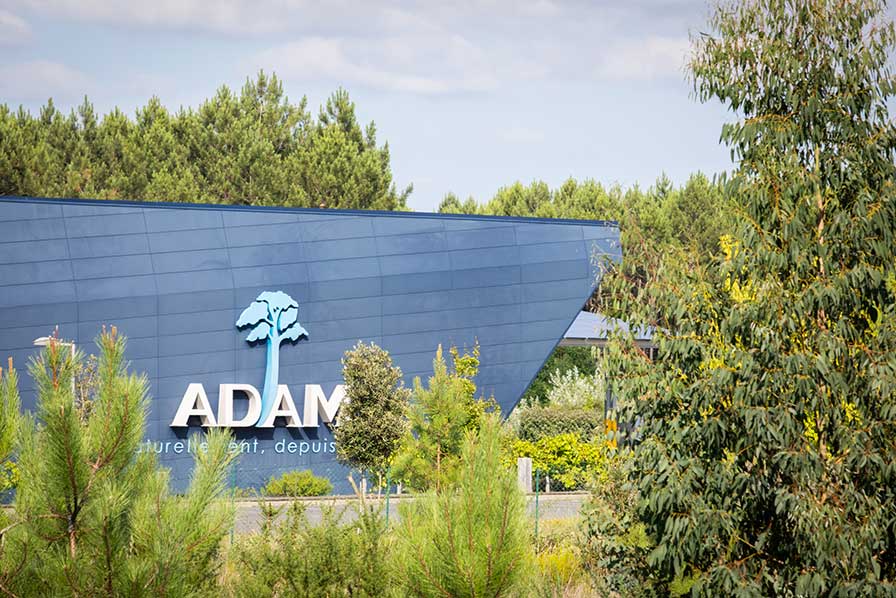
© Adam
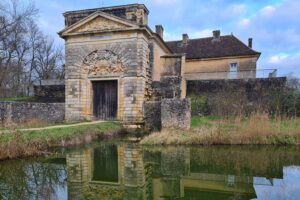
© Médoc Tiers Lieux

© Grès Médocains
With…
APADEV et le fonds de dotation VALOREM, Cabinet de curiosités (Adam, CPIE, Médoc Tiers Lieux, Parc Naturel Régional Médoc), EH!CO, ESSpairs, Grès Médocains, Isolat, La Briqueterie, La cuisine de L, Librairie des transitions et la Cocotte, L’Escale et la recyclerie
And the support of:

Timetable :
8 am / 6:30 pm
Bus travel time :
about 1h30 (3h round trip)
Key words : crafts, local know-how, heritage, shared resources, cooperation, corporate territorial responsibility
Tourism benefits : Châteaux Route, Fort Médoc, Gironde estuary, wine tasting
Pathway 4 – Sud-Gironde

❯ Revitalisation and resilience
Meeting the challenges of rural life
This pathway illustrated how cooperatives, citizens and food dynamics, as well as social innovation can revitalise rural areas. Not forgetting a taste of the historical, landscape and culinary assets of this endearing land of the Sud-Gironde.
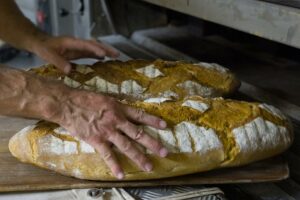
The day began at Sigalens with a hearty breakfast and a visit to the bakery run by the association La Sigale & le Fournil. Through the testimonies of the mayor of Sigalens and various stakeholders, the focus was on sustainable food and citizen participation as regional drivers. It was an opportunity to learn more about various local initiatives, such as the Food Security experiment, the participatory grocery store, and the third place La Boussole third-location centre and the bakeries involved in the SSE.
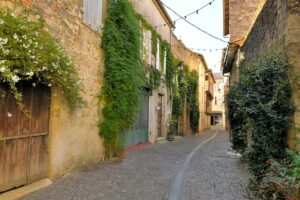
The tour then moves on to La Réole where the Mayor will be on hand to welcome the group, followed by a 100% plant-based and local lunch prepared by La Bulle and served at the Town Hall. The tour continued through the streets of this medieval fortified town on the banks of the Garonne, punctuated by stops at cultural sites La Petite Populaire and the local microbrewery. Finally, a meeting with local SSE actors provided an opportunity to discuss the challenges faced by social innovation in a participatory and caring approach: how the region is coping with its ageing population, particularly in terms of housing, and how inclusive and resilient SSE dynamics are being developed to meet the needs of all, including the most vulnerable, with a view to sustainability.
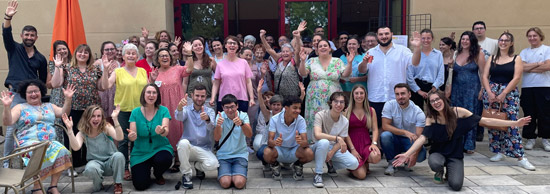
© La Sigale et le Fournil
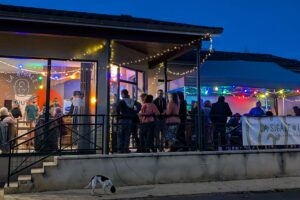
© La Sigale et le Fournil
© Christophe Goussard
© Adobe stock
With…
APEFEM, Association Agroécologique Carbouey, Chapeau et Bottes, Habitats des Possibles, La Boussole, La Bulle, La Collective, La NOMALI & CO conserverie du Sud-Gironde, La Petite Populaire, La Sigale & le Fournil, Les Amis de la Coopé, Osons les Derniers jours Heureux, Panuz, Solid’Avenir…
And the support of:

Timetable :
8 am / 6 pm
Bus travel time :
about 1h (2h round trip)
Key words : resilience, citizen participation, social innovation, sustainable food, care, culture
Tourism benefits : softness of the landscape, the town of La Réole with its Town of Art and History label, tasting of local produce
Pathways in neighbouring departments
Pathway 5 – Charente
❯ Circular economy
Between transition and circular economy
This journey highlighted the virtues of the circular economy. It promoted initiatives by stakeholders committed to giving objects a second life and structuring local reuse sectors, particularly in the construction and textile industries, through collaborative initiatives. And because Angoulême, designated a UNESCO Creative City in 2019, is also the world capital of comic books, an immersion in the city's artistic and cultural universe was a must!
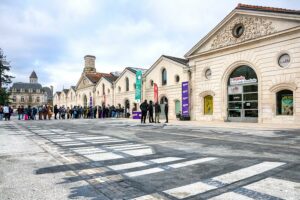
The day began at Plan B in Gond-Pontouvre, a new space dedicated to reuse and raising public awareness of waste sorting and recovery in the Angoulême conurbation. The Agglomération du Grand Angoulême awaited the participants. The visit to the site was an opportunity to discover the activities of SSE actors taking up the challenges of the circular economy. In this context, workshops were offered by the resident associations of the Plan BBased on the principle that ‘the best waste is no waste’, the focus was on recycling and repackaging various everyday materials and objects. The next meeting took place at the Charente Departmental Council, where participants enjoyed a delicious lunch prepared by a caterer committed to the professional integration of people who are distant from the job market, with a tasting of local specialities.
The tour continued with a visit to La Bascule, the first platform for reusing building materials created in Charente, which is also a social integration workshop. This new player provides a tailored response to the professional, social and environmental needs of the region. To round off the day and before heading back to Bordeaux, participants were invited to explore the treasures of the Cité internationale de la bande dessinée et de l’image and the Musée de la BD, to discover the initiatives undertaken by this cultural player in the field of transitions.
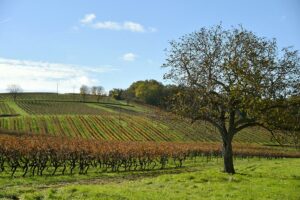
© Région Nouvelle-Aquitaine / Françoise Roch
© Région Nouvelle-Aquitaine / Françoise Roch
© Région Nouvelle-Aquitaine/ Yannick Pirot
With…
Atelier 9 (ARU), CADRESS, CEDIF, CIDIL, La Bascule, Musée de la BD, Mycelium Charente, Plan B (Cyclofficine, Envie Charente, Laplla.Net, Recyclerie Avril), Tisséna
And the support of:

Timetable :
8 am / 7:30 pm
Bus travel time :
about 1h30 (3h round trip)
Key words : circular economy, recycling, reconditioning, reuse, construction, work integration, textiles
Tourism benefits : comic strips, culture, local gastronomy
Pathway 6 – Charente-Maritime
❯ Cooperative models and local development
In the footsteps of cooperative models
This course focused on how cooperative models can promote social cohesion, inclusion and integration, and how local authorities can draw on the social and solidarity economy to develop economic and social development in their area. It was also an opportunity to discover the beautiful city of Saintes, with its rich and vibrant heritage.
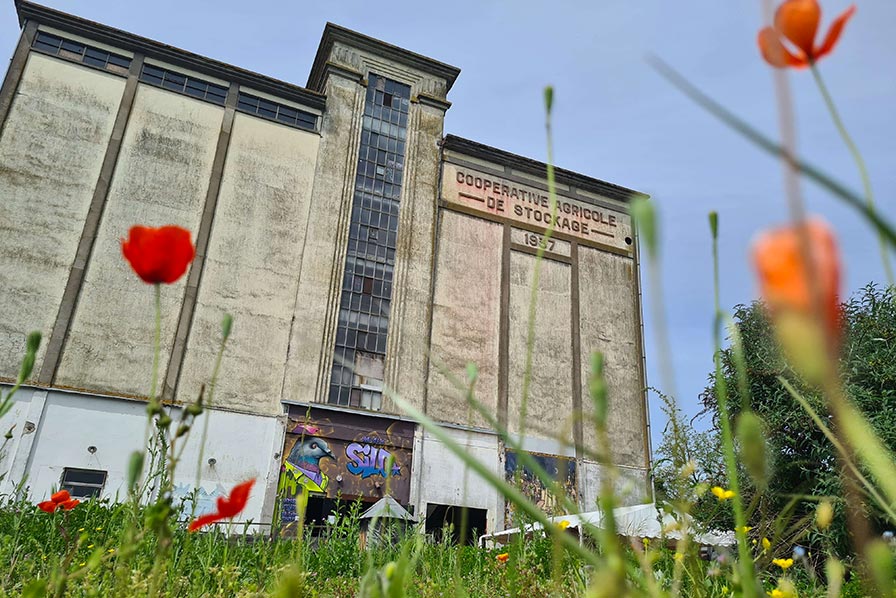
The day began at Saintes at the headquarters of Coop Atlantique, a consumer cooperative operating in 11 departments, which introduced the commitment and impact of the cooperative model on the development of local social and solidarity economy projects. The vice-president of Saintes Grandes Rives, L’Agglo présenta la stratégie en Économie Sociale et Solidaire de la collectivité. L’association ADEFIP explained the benefits of crowdfunding in the creation or development of local projects, using the example of the dedicated platform " J’adopte un projet " platform. Next up is Dans l’œil du Silo, a former grain silo that has been converted into a multicultural alternative space that fosters social cohesion. Here, Côté Coulisses and CAE Oriú demonstrated their support for cultural actors. La Douka, an inclusive caterer, offered a lunch featuring flavours from here and elsewhere.
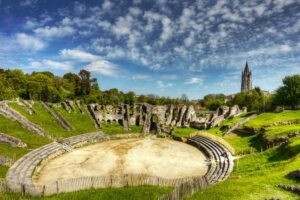
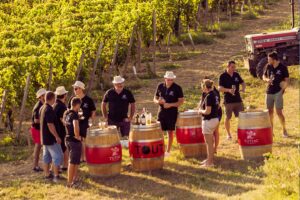
In the afternoon, a tour of the heritage of Saintes allowed us to discover the garden and the remains of the Arenas, stone curiosities along the green line route, the garden of La Belle Étoile garden and a presentation of the work carried out by the Le Sas. The walk ended at Saint-Eutrope Basilica. On the way back, we stopped at the cooperative wine cellar Vignerons de Tutiac cooperative winery, which brings together 500 cooperative winegrowers north of the Gironde estuary, for a tour and to taste the wines produced on the estate.
© Dans l’œil du Silo
© Adobe Stock
© Studio Tonelli
With…
ADEFIP, Coop Atlantique, Coopération agricole Nouvelle-Aquitaine, Coopérative d’activités et d’emploi Oriú, Coopérative Les Vignerons de Tutiac, Côté Coulisses, Dans l’œil du Silo, La Belle Étoile, La Douka, Le Sas, MétamorphOse
And the support of:

Timetable :
8 am / 7:30 pm
Bus travel time :
about 1h30 (3h round trip)
Key words : cooperatives, consumption, social links, culture and art, inclusion, integration, support
Tourism benefits : historical heritage with Roman ruins and Romanesque jewels, gardens, vineyards
Pathway 7 – Dordogne
❯ Relocating and structuring SSE-inspired industries
Relocating and structuring industries
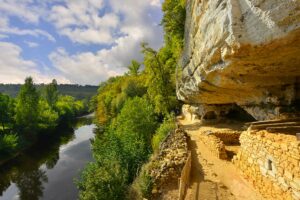
This journey highlighted how local initiatives can structure and sustainably revitalise craftsmanship and culture, which are inseparable from the region's identity. It was also an opportunity to discover prehistoric art in Lascaux, the emblem of the Périgord Noir, and to enjoy the flavours of the region.
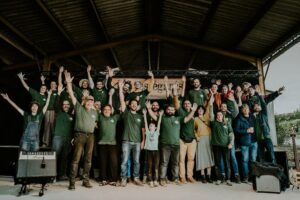
In the commune of Tursac, the day began with a visit to a community sawmill, Au Coin des Scieurs, which works to develop a local, socially responsible timber and forestry industry. The aim was to promote sustainable management of the Périgord's forest heritage while consolidating local expertise. To showcase various initiatives promoting the use of wood, workshops were organized throughout the morning with the association's social economy partners. The programme included a forest marking workshop, a woodcutting demonstration, a green wood carving workshop, bread baking in a traditional wood-fired oven and many other activities related to wood and eco-construction. After this immersion, a barbecue in the countryside showcased the gastronomy of the Périgord region for a convivial moment.
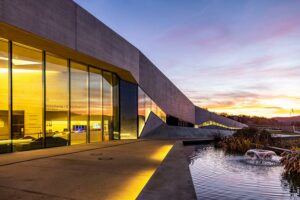
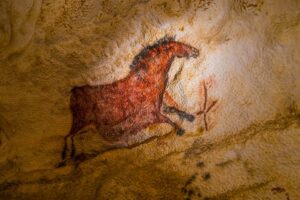
In the afternoon, off to Montignac-Lascaux for an interactive tour of Lascaux IV, the International Centre for Cave Art. This was an opportunity to immerse oneself in the prehistoric history of the region and marvel at the full-scale replica of the Lascaux Cave. The day ended with a presentation of the social project, Fonds Lascaux, set up by the site manager, Sémitour. This endowment fund develops solidarity actions in favour of people who are far from culture, thus facilitating access to this heritage treasure.
© Alexandra Photographe des Amoureux
© Déclic & Décolle
© Adobe Stock
© Dan Courtice
With…
Au Coin des Scieurs, Cœur de Forêt, Coop&BAT, La Brigad’Ali, La Gare Mondiale, Les Boiseaux, Sémitour, Semiper
And the support of:

Timetable :
8 am / 7 pm
Bus travel time :
about 2h (4h round trip)
Key words : wood and forestry, reuse, sustainable construction, traditional skills, social projects, culture and heritage
Tourism benefits : landscapes, the Lascaux cave, cave history, country-style barbecue with local produce
Pathway 8 – Landes
❯ Social innovation and food
Accelerating social innovations
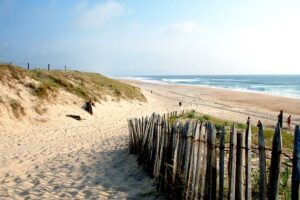
This journey illustrated how the social and solidarity economy can revitalise rural areas through social innovation projects, particularly in the fields of professional integration and food. Various local initiatives provided concrete solutions to issues such as employment, housing, food, mobility and sustainability. It was an opportunity to see the Landes forest and coastal beaches in a new light.
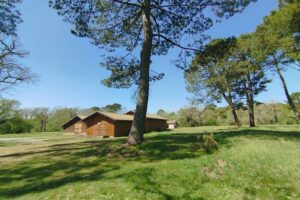
The day began at Pontenx-les-Forges, in the heart of the Tastot airial, in a third-party food centre run by the association La Smalah which works to build resilience in the region through training in small-scale farming and re-engaging young people. The focus was on professional integration, solidarity-based mobility and reuse, through the presentation of the local experiment of the Zero Long-Term Unemployment Territory project in EBE SEVE 40. The day continued at Mimizan-plage, at the Hélistation, a former first aid station converted into a living and accommodation facility. Designed to accommodate seasonal workers and young people in employment or training, this project meets a strong need for affordable housing in seaside resorts. This visit provided an opportunity to discover initiatives promoting local and sustainable food, as well as local public policies supported by the Landes Departmental Council and the Nouvelle-Aquitaine Region. On this occasion, a partnership agreement was signed between the two local authorities, followed by a tasting of local products for lunch.
The next stop is the Grenier de Mézos, a community recycling centre that fights against waste and exclusion. The Youth Services Cooperative also presented its work there. This initiative, led by the association PLOUCS association and the cooperative Co-actions, enabled nearly a hundred young people to experience entrepreneurship in a collective and cooperative form. The day was enriched by testimonials from elected officials and actors in the social and solidarity economy.
© Georges-Henri Abtour et Région Nouvelle-Aquitaine
© Adobe Stock
With…
EBE SEVE 40, Chanvre des Landes, Co-actions, Éole, Grenier de Mézos, Hélistation, La Smalah, PLOUCS
And the support of:


Timetable :
8 am / 6 pm
Bus travel time :
about 1h30 (3h round trip)
Key words : professional integration, training, employment, circular economy, housing, entrepreneurship, agriculture, food, youth
Tourism benefits : pine forests, Landes airial, ocean, tasting of local products
Pathway 9 – Lot-et-Garonne
❯ Regional attractiveness and tourism
Cooperating for transitions
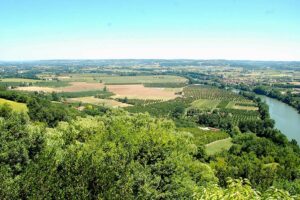
Lot-et-Garonne is a land of confluence steeped in rural and riverine identity. This tour highlighted various examples of local cooperation in the service of environmental preservation, particularly in terms of the circular economy, but also the development and attractiveness of a rural area: tourism, local food, and initiatives aimed at young people. And along the way, visitors could discover the department's typical landscapes and villages.
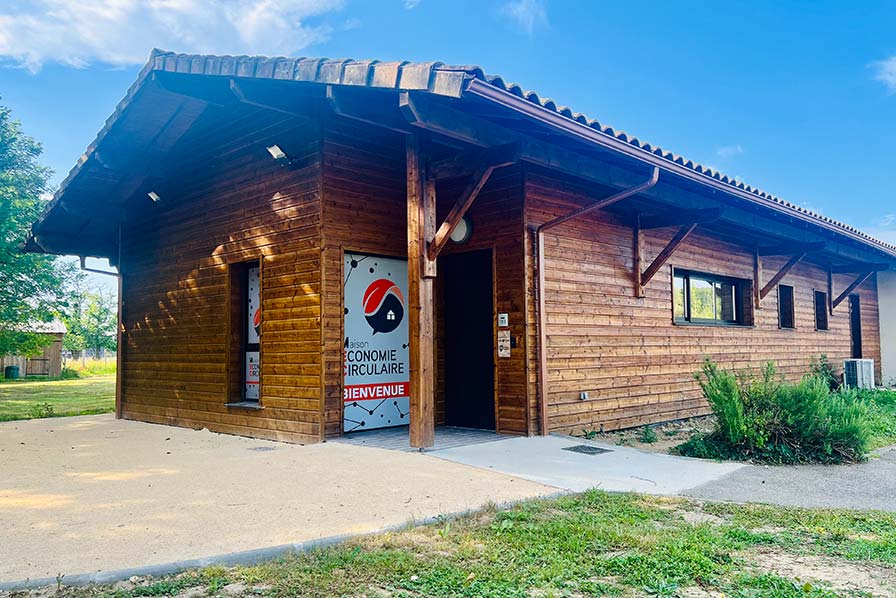
The day began at Damazan at the Departmental waste processing association, ValOrizon, which opened its doors to show how to create wealth from what is known as ‘waste’. The president of the site presented the missions and operations of the ecopark, which includes an Economic Cooperation Hub, the Village du réemploi (Reuse Village) and a Cluster Économie circulaire et valorisation des matériaux recyclablesThe visit to the site provided an opportunity to talk to local social and solidarity economy actors working to promote reuse and to learn about the activities of the Maison de l'Économie Circulaire (Circular Economy Centre) and the sorting centre. The discussions highlighted the virtuous links between innovation, recovery, solidarity and environmental responsibility.
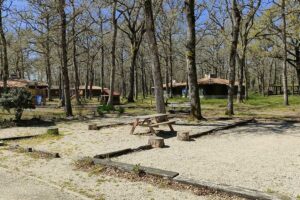
The 100% local lunch took place in the heart of an oak forest, at La Taillade, an inclusive and educational residential care home. This was followed by a tour of the site to meet local SSE stakeholders, divided into three thematic sections. The first was devoted to new visions of tourism: solidarity and ecology. The section on agriculture and food addressed local supply chains, the fight against waste and solidarity. Finally, in the section on youth, it was possible to learn more about how the SSE is being introduced in schools, in training programmes and in awareness-raising.
© ValOrizon
© La Taillade
© Adobe Stock
With…
Agrocampus, Archipel 47 (Ateliers de Boussères, Belvédère, Berceau des Nymphéas, Château & Fabriques de Buzet, La Taillade, La Vieille École, Le Grand Bain, Les Petits Grains, Maison Forte, Tera), Cluster Économie circulaire et valorisation des matériaux recyclables, Emmaüs le Maquis, L’Esper, Hang’art, La Ferme des producteurs, ValOrizon PTCE Village du Réemploi, Syndicat IAE (AFDAS, Archi’Mede, Enviplus, Régie Vallée du Lot)
And the support of:

Timetable :
8 am / 6 pm
Bus travel time :
about 1h (2h round trip)
Key words : circular economy, reuse, innovation, solidarity, environmental responsibility, recycling, agriculture, tourism, youth
Tourism benefits : oak forest, medieval town and bastide, tasting of local products